University students adopt their own rules while national legislation stalls
More university student councils across South Korea are adopting rules against discrimination and hate speech as a comprehensive antidiscrimination bill remains stalled at the National Assembly nearly two decades after it was first proposed.
According to local reports, Seoul National University's student council amended its constitution in September to explicitly guarantee students "the right not to be discriminated against."
The new provision prohibits discrimination on grounds including gender, sexual orientation, gender identity, nationality, race, religion, political opinion, disability, medical history, age, family background and socioeconomic status. It also covers less commonly specified grounds such as appearance, admissions track and military service status.
Similar provisions have been adopted by student councils at other universities, although the grounds of discrimination covered vary.
Hanyang University's student council introduced a provision in September prohibiting discrimination based on gender, sexual orientation, gender identity, race, ideology, religion and disability.
Duksung Women's University also includes nationality, age and economic status among its protected categories, while Sungshin Women's University includes age but does not explicitly mention gender identity.
The University of Seoul takes a broader approach, outlining a general "duty not to discriminate" without specifying individual grounds.
Student councils at Korea University, Kyung Hee University, Kookmin University, Hongik University, Hankuk University of Foreign Studies, Seoul National University of Science and Technology, and Seoul Women's University have also adopted similar provisions.
Some universities have gone further by establishing separate student bodies or organizing activities dedicated to minority rights.
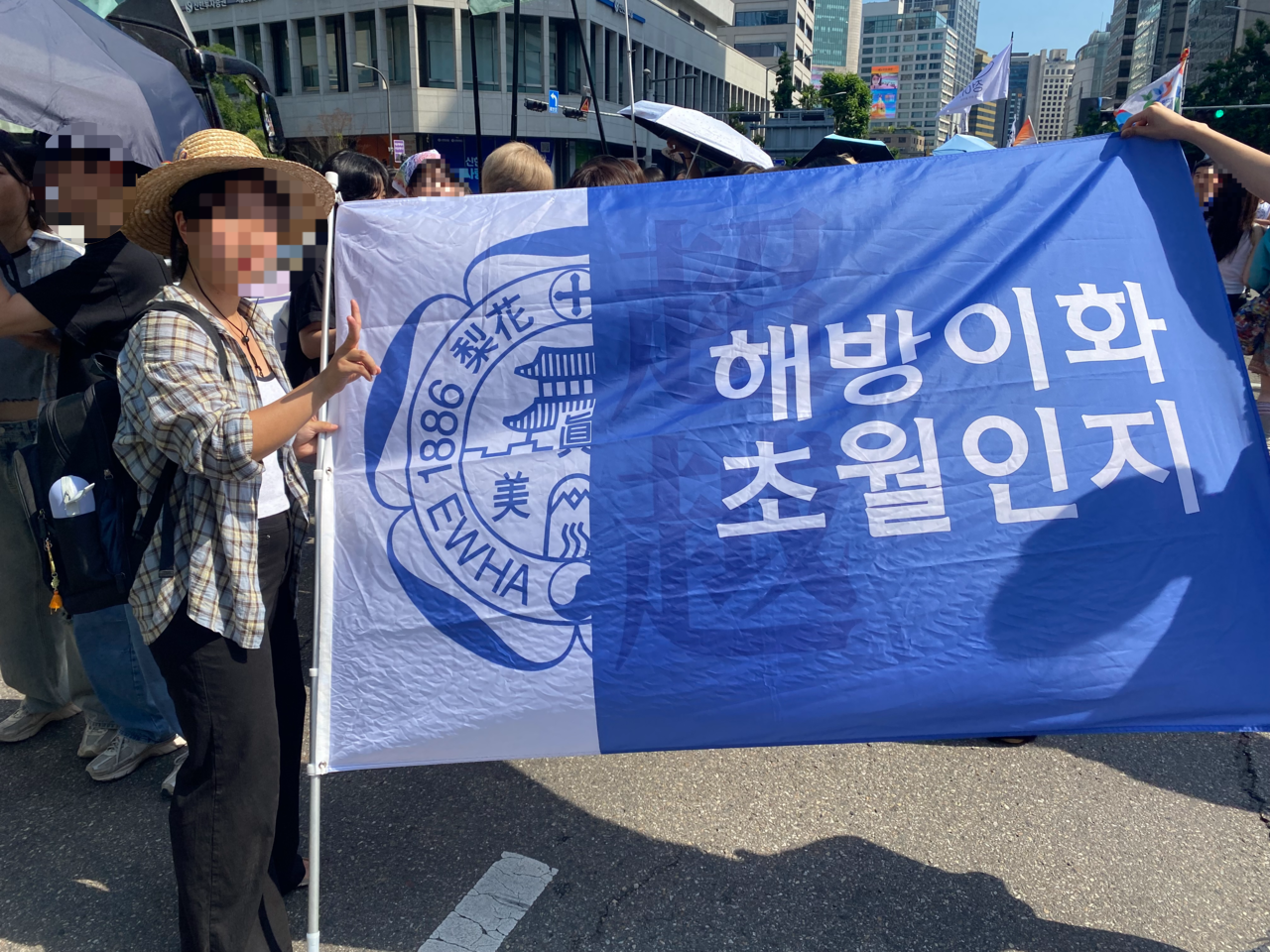
Ewha Womans University's student council operates a committee dedicated to minority rights, while Sogang University has a separate student council representing sexual minorities.
At Sungkonghoe University, student groups organized a "Mini Queer Parade" in 2023, marking the first LGBTQ+ Pride parade held on a university campus in South Korea.
Still, it is uncertain whether these student-led initiatives will translate into broader institutional protections for minorities.
In 2020, Seoul National University's Human Rights Center sought to revise the university's human rights charter, which applies to students and faculty. The proposal was ultimately abandoned following opposition from a Christian alumni association.
Legislative deadlock preventing passage of anti-discrimination law
The growing adoption of antidiscrimination provisions by student councils also stands in contrast to the prolonged legislative deadlock over a comprehensive anti-discrimination law.
The National Human Rights Commission of Korea first recommended enacting such legislation in 2006. The Roh Moo-hyun administration introduced a bill in 2007, but it was later scrapped. Another attempt in 2013 ended in withdrawal amid strong opposition from conservative Christian groups.
The proposed legislation seeks to prohibit discrimination on grounds including gender, sexual orientation, gender identity and disability across areas such as employment, education and access to medical services.
The latest bill was introduced in January this year, but has yet to make significant progress in the National Assembly.
Kwon Sun-bu, operations director at Rainbow Action Korea, welcomed the student-led initiatives.
"It is a positive development in university communities, where students from diverse backgrounds come together, especially given the recent shift toward conservatism among young people," Kwon told The Korea Herald.
"The Antidiscrimination Act has been left in limbo for nearly 20 years due to legislative inaction," Kwon added. "Even students are taking steps to fill that void. The National Assembly needs to do its part."
seungku99@heraldcorp.com